

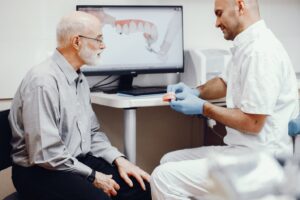
If you’re new to wearing dentures, speaking and eating may feel strange at first. Foods you once enjoyed might seem more difficult to chew, and you may worry about your dentures slipping while you eat. But this, too, shall pass. Adjusting to eating with dentures takes time, practice, and a few helpful strategies. Read all about them below!
Start with Soft Foods
When you’re first learning to eat with dentures, begin with foods that require minimal chewing. Soft options such as scrambled eggs, yogurt, mashed potatoes, oatmeal, and cooked vegetables can help you practice without putting too much pressure on your gums.
As you become more comfortable, gradually introduce firmer foods. Cut food into small, manageable pieces to make chewing easier and reduce the likelihood of your dentures shifting.
Avoid especially hard, sticky, or chewy foods until you feel confident eating with your dentures. Your dentist can also recommend foods to avoid based on how well your dentures fit.
Chew Slowly and Use Both Sides of Your Mouth
One of the biggest adjustments for new denture wearers is learning how to chew differently. Natural teeth provide stability that dentures may not initially replicate.
Try chewing slowly and distributing food evenly on both sides of your mouth. This helps balance the pressure on your dentures and may reduce rocking or slipping while you eat.
Take smaller bites than usual and avoid rushing through meals. With consistent practice, your coordination and confidence should gradually improve.
Be Careful with Hot Foods and Drinks
Dentures can change how you perceive temperature in your mouth, particularly when they cover portions of your palate. As a result, you might not recognize that food or beverages are too hot until they cause discomfort or burns.
Test the temperature of foods and drinks before consuming them. Allow soups, coffee, and other hot items to cool to a comfortable temperature before taking a bite or sip.
Being mindful of temperature can help prevent injuries while you adjust to your new dentures.
Keep Your Dentures Clean
Food particles can collect beneath dentures while you eat, causing irritation, discomfort, and unpleasant odors. Remove and clean your dentures according to your dentist’s instructions, and rinse your mouth after meals when possible.
Brush your dentures daily with a soft denture brush and an appropriate denture cleaner. Also, clean your gums, tongue, and any remaining natural teeth to maintain good oral health.
If you use denture adhesive, follow the product instructions and your dentist’s recommendations.
Address Discomfort or Slipping Early
Some tenderness is common when you first begin wearing dentures. However, persistent pain, sores, or dentures that repeatedly slip while eating may indicate that adjustments are needed.
Contact your dentist rather than trying to reshape your dentures yourself. Properly fitted dentures can make eating more comfortable and help you enjoy a wider variety of foods.
Adjusting to eating with dentures requires patience, but you don’t have to figure everything out overnight. With time and guidance from your dentist, you can become more comfortable at mealtimes and enjoy your favorite foods again!
About the Practice
Drs. McClain and Patel invite you to Goodlettsville Smiles for all your denture needs. Whether you’re considering them for the first time or just an adjustment, our talented team looks forward to serving you in our modernized dental practice that’s focused on comfort, cleanliness, and innovation. Reach us online or call (615) 859-0188.