

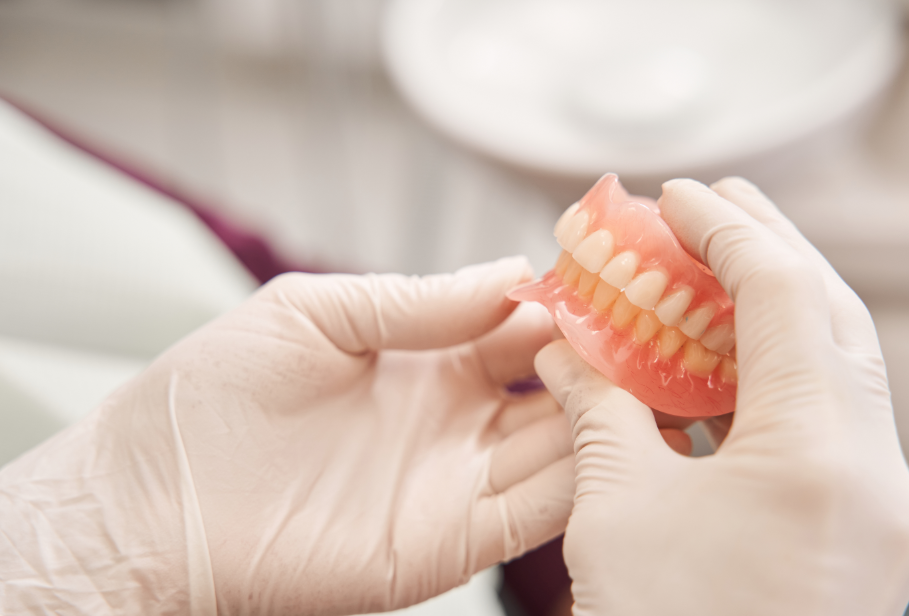
Dentures do an excellent job of restoring your smile and helping you speak more clearly, but they can also change the way you eat. If you’ve noticed yourself avoiding certain foods since getting dentures, you’re not alone. Research suggests that wearing traditional dentures may impact nutrition because they can make chewing some healthy foods more difficult.
Fortunately, understanding the connection between dentures and nutrition can help you make informed choices to support both your oral health and your overall well-being.
Why Dentures Can Change Your Diet
Natural teeth provide a strong, stable bite that allows you to comfortably chew a wide variety of foods. Traditional removable dentures restore much of that function, but they don’t provide the same biting force as natural teeth.
As a result, many denture wearers begin avoiding foods that are difficult to chew, such as:
- Raw fruits and vegetables
- Nuts and seeds
- Lean meats
- Whole grains
- Crunchy salads
While these foods can be challenging with dentures, they’re also packed with important vitamins, minerals, fiber, and protein. Over time, replacing them with softer, more processed foods may reduce the variety and nutritional quality of your diet.
How Nutrition and Oral Health Are Connected
Good nutrition plays an important role in maintaining your overall health, but it also supports healthy gums, bone strength, and your body’s ability to heal.
A balanced diet provides nutrients such as:
- Calcium to support healthy bones
- Vitamin D to aid calcium absorption
- Vitamin C for healthy gums
- Protein for tissue repair
- Fiber to support digestion and heart health
When chewing becomes difficult, some people unintentionally consume fewer of these nutrients. This can affect not only oral health but also energy levels, immune function, and long-term wellness.
Tips for Eating Well with Dentures
If you wear dentures, you can still enjoy a nutritious diet with a few simple adjustments.
Try preparing foods in ways that make them easier to chew, such as:
- Steaming vegetables until tender
- Cutting fruits into smaller pieces
- Choosing softer proteins like fish, eggs, or shredded chicken
- Cooking tougher meats slowly until they’re tender
- Blending fruits and vegetables into smoothies
It’s also helpful to chew evenly on both sides of your mouth to improve denture stability while eating.
If your dentures feel loose or uncomfortable, don’t assume it’s something you simply have to live with. Poor-fitting dentures can make eating much more difficult than necessary.
Could Implant-Supported Dentures Help?
For some patients, implant-supported dentures offer greater stability than traditional removable dentures.
Instead of resting only on the gums, these dentures attach securely to dental implants placed in the jawbone. This added support often allows patients to bite and chew with greater confidence while reducing slipping and movement during meals.
Many people with implant-supported dentures find it easier to enjoy a wider variety of nutritious foods, including crisp vegetables, lean meats, and fresh fruit. Better chewing efficiency may make it easier to maintain a balanced diet while also improving comfort and confidence.
Your dentist can help determine whether implant-supported dentures are an appropriate option based on your oral health, bone structure, and treatment goals.
Small Changes Can Make a Big Difference
Whether you wear traditional dentures or are exploring other tooth replacement options, paying attention to your nutrition is an important part of maintaining your overall health. Eating a balanced diet and addressing any issues with denture fit can help you enjoy meals more comfortably while supporting your body for years to come.
A healthy smile and a healthy diet work together, making every bite an investment in your overall well-being.
About the Practice
At Goodlettsville Smiles, Dr. McClain and Dr. Patel are committed to helping patients restore both the function and appearance of their smiles through personalized, compassionate dental care. We offer comprehensive tooth replacement solutions, including traditional dentures and implant-supported restorations, with treatment plans tailored to each patient’s unique needs and lifestyle. By focusing on long-term comfort, oral health, and quality of life, the team helps patients regain confidence in their smiles and enjoy eating comfortably again.
Call us at (615) 819-1644 or schedule your appointment online.